
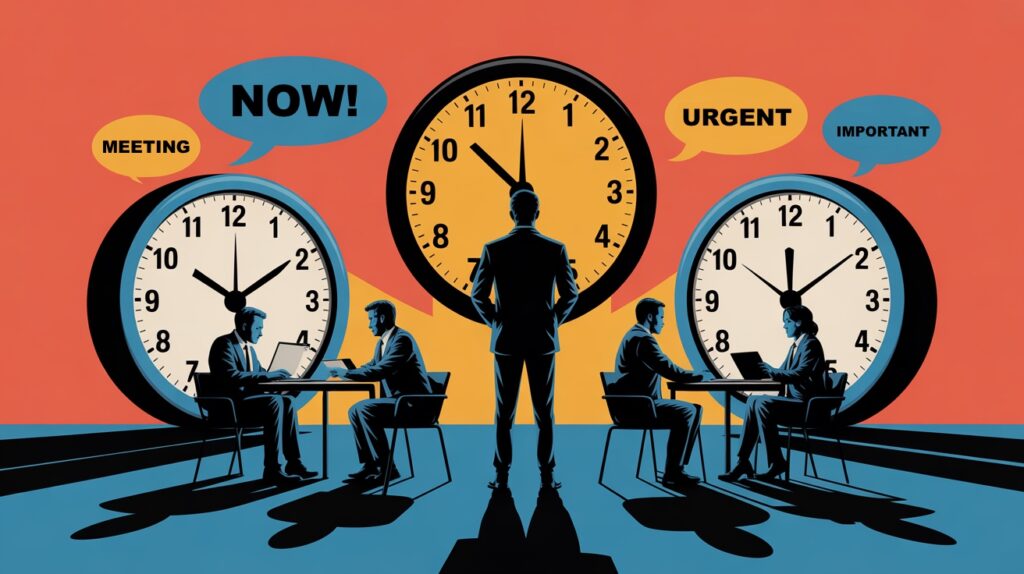
The global workplace has undergone a seismic shift, with remote and distributed work transforming from a temporary measure to a permanent fixture. For digital companies, whose very core is built on rapid innovation and rapid delivery, the shift to remote presents a new, critical operational challenge: how to maintain high velocity and rich contextual alignment when teams are physically dispersed.
The core challenge is not just coordinating across different hours, but combating communication friction, context loss, and the cognitive toll of constant interruptions inherent in remote work. The ability to build, ship, and iterate products effectively relies on mastering collaboration that is intentional, documented, and independent of real-time availability.
While video conferencing once provided a lifeline, the true operational advantage lies in the ability to move beyond fixed schedules, allowing the organization to embrace and maximize different work styles – from early-bird marketeers to night-shift developers – by building, shipping, and iterating products effectively through intentional, documented collaboration independent of real-time availability.
The End of the Synchronous Straitjacket: A Strategic Shift
Traditional operational models, heavily reliant on real-time meetings and immediate responses, are a relic of a co-located era. For a modern digital company, this synchronous straitjacket introduces bottlenecks and fragility. In a truly distributed setting, time zones become less of an obstacle and more of an asset when asynchronous communication is embraced.
This isn’t about eliminating synchronous interactions entirely, but rather about making them intentional, impactful, and less frequent. The goal is to minimize dependency on everyone being online at the same time, maximizing global coverage, freeing up team members to achieve deep focus, and ultimately, accelerating market responsiveness.
Asynchronous Flow: The Engine for Focus and Quality
While the challenges of a global workforce necessitate asynchronous processes, these practices are equally powerful for smaller companies, startups, or teams operating within a single or adjacent time zone (e.g. across Europe, or within Germany). For these local remote teams, the strategic imperative shifts from managing time difference to maximizing focus and protecting mental energy.
The goal is not to eliminate meetings because of time zones, but to eliminate meetings that are interruptions, allowing for superior Deep Work.
The Local Remote Advantage: Protecting Focus
For a local remote team, the temptation is to prioritize synchronous communication, simply because “everyone is available”… Don’t underestimate the dangers lurking:
- The Interruption Tax: Constant pings, unplanned calls, and the expectation of immediate response break the flow of focused work (Deep Work). Studies show it can take over 20 minutes to fully regain focus after an interruption.
- The Meeting Trap: Every small discussion defaults to a meeting, wasting cumulative hours and preventing critical individual tasks (like coding, designing, or detailed analysis) from being completed.
- Decision Fragility: Decisions are made quickly in a synchronous meeting (the “loudest voice wins”) rather than being vetted through documented review, leading to less robust outcomes.
The Pillars of Asynchronous Operational Shift
Mastering asynchronous flow requires a deliberate recalibration of processes, tools, and mindset across the entire organization.
1. Documentation as the Single Source of Truth (SSOT)
In an asynchronous environment, documentation is paramount. Every decision, piece of context, and strategic artifact needs to be meticulously recorded and easily accessible. For digital companies, this moves beyond just project notes to include product vision, design specifications, and go-to-market strategies.
Actionable Advice for the Digital Enterprise:
- Centralized Knowledge Base: Invest in robust platforms (e.g., Notion, Confluence) to serve as the single source of truth for product specs, architectural diagrams, design system components, and company policies.
- Decisions as Artifacts: Transform meeting summaries into actionable decision logs with clear owners and next steps. These logs connect the why (strategic alignment) to the what (implementation).
- “Read-First” Culture: Foster self-sufficiency by ensuring teams consult available documentation (e.g. Product Requirements, Meeting Notes) before escalating questions.
- Visual Documentation: For complex digital products, utilize visual aids like flowcharts, wireframes, system maps, and user journey maps to convey information quickly and non-verbally.
2. Intentional Communication Channels & Protocols
In a globally distributed digital company, noise is the enemy of focus. Leaders must define clear protocols for when to use different channels and what response times to expect, linking the channel to the urgency and scope of the information.
Actionable Advice for the Digital Enterprise:
- Categorize Channels by Intent: Designate specific channels for different types of communication (For example: Slack/Teams for high-urgency/quick Q&A; Jira/Asana for task-specific discussions; Email/Announcement Platforms for formal company-wide news).
- Public by Default: Encourage communication that is public by default (in channels, on tasks, in documents) rather than DMs. This creates an institutional memory accessible to the entire company.
- Defined Response SLAs (Service Level Agreements): Clearly communicate expected response times (e.g., “Critical incidents: immediate alert; Task comments: 24 hours; Low-priority feedback: 48 hours”).
- Batching for Deep Work: Encourage team members, especially engineers and designers, to batch their responses and check communication channels at set times, protecting the necessary deep work required for complex digital product development.
3. Asynchronous Tools & Integrated Workflows
Beyond basic communication, successful distributed companies leverage a toolchain designed for non-linear, collaborative contribution. These tools must facilitate work without requiring everyone to be online simultaneously, providing cross-functional visibility across the product lifecycle.
Actionable Advice for the Digital Enterprise:
- Integrated Project Management: Utilize tools (Jira, Asana) not just for task tracking, but as a centralized hub for progress updates and cross-team dependencies. Ensure every task is linked to a higher-level strategic epic or goal.
- Distributed Ideation & Feedback: Explore tools like Miro or Whimsical for collaborative whiteboarding and tools like Figma for asynchronous design feedback, allowing stakeholders to contribute to the creative process over an extended period.
- Continuous Integration/Continuous Delivery (CI/CD): Implement robust, automated CI/CD pipelines (e.g., GitHub, GitLab) that act as an asynchronous quality gate, ensuring code can be reviewed, merged, and deployed without real-time developer coordination.
- Video Messaging for Context: Use tools like Loom or inbuilt video-features (e.g. ClickUp) for quick video explanations, feature demos, or personalized feedback. This provides the richness of a conversation without the scheduling constraint.
Recommended Reading: check out this article here for a quick overview of some excellent tools.
4. Cultivating a Culture of Trust and Outcome Focus
Asynchronous work thrives on trust and empowerment. Leaders must pivot from monitoring “presence” to evaluating impact, empowering teams to manage their own time and output, thereby fostering innovation and velocity. This requires embracing calculated risk and decentralizing agency.
Actionable Advice for the Digital Enterprise:
- Empower Autonomous Teams: Delegate decision-making authority to the smallest possible unit (e.g., a specific development squad or feature team). This reduces organizational bottlenecks and fosters deep ownership over product modules or services. Teams should have the agency to determine how they achieve their goals.
- Adopt “Easier to Ask Forgiveness than Permission” (EAFP): Cultivate a mindset where teams and individuals are encouraged to make informed, reversible decisions and move forward swiftly, rather than waiting for multi-level sign-offs. The default should be to act, especially in areas with low-risk impact or when a decision is time-sensitive. This accelerates iteration cycles and signals high trust.
- Embrace Chronotypes and Flexibility: Recognize that team members have different optimal working hours (chronotypes). By focusing on output and documentation, the company gains the strategic advantage of accommodating varied styles – from early morning design sprints to late-night coding sessions – maximizing individual productivity and energy.
- Focus on Output, Not Presence: Evaluate performance based strictly on deliverables, product success metrics, and outcomes, rather than real-time availability, hours logged, or activity indicators. The metric for success is value delivered, not visible effort.
5. Intentional Synchronous Touchpoints
Synchronous meetings still have a vital role in building relationships and resolving complexity, but they must become a premium, scarce resource in the digital company.
Actionable Advice for the Digital Enterprise:
- “No Update, No Meeting”: If an update can be shared asynchronously via a written memo or dashboard, do not schedule a meeting for it. Reserve sync time for high-value activities (e.g., quarterly planning, deep problem-solving, team building).
- Mandatory Pre-Reads: Share detailed agendas and any necessary pre-reading materials (e.g., data analysis, a draft PRD) well in advance, making the meeting a dedicated time for debate and decision-making, not information transfer.
- Actionable Outcomes & Documentation: Every meeting must conclude with clear action items, owners, and deadlines, documented and shared immediately in the SSOT.
Conclusion
The operational shift towards asynchronous flow is not merely a tactical adjustment; it’s a strategic imperative for the modern digital company. By embracing SSOT-driven documentation, intentional communication, integrated tools, and a culture of trust, digital leaders can unlock unprecedented levels of productivity, global collaboration, and velocity, ensuring their organization doesn’t just survive in the distributed era, but thrives.