
Simple Hacks to Stop Planning and Start Doing
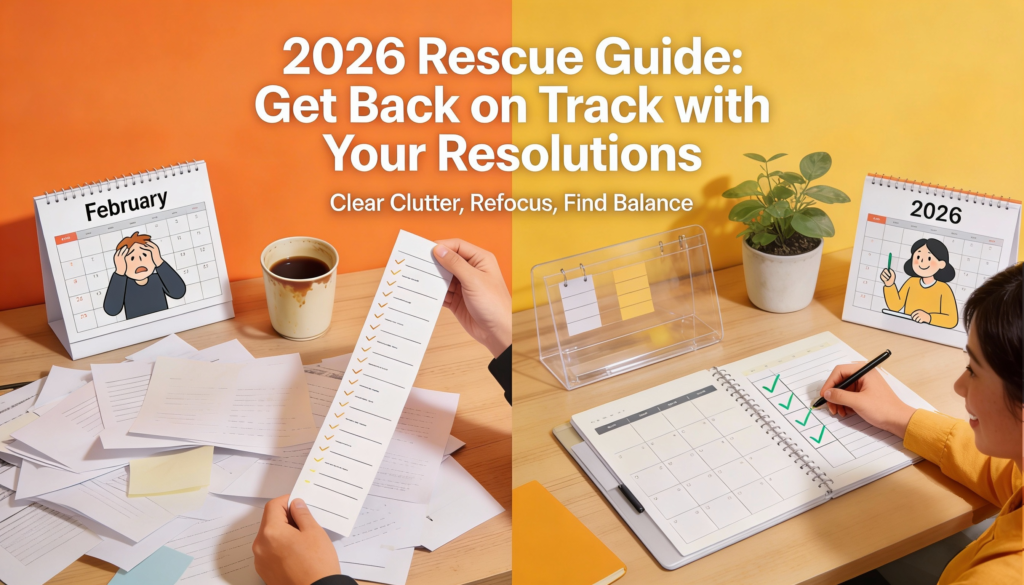
It’s still early in 2026, and with it comes the promise of fresh beginnings. For many of us, this is the time to finally tackle those New Year’s resolutions: becoming more productive, getting better organized, and breaking free from the chaos of our daily routines. Sounds familiar? You’re not alone. With overflowing inboxes, endless notifications, and to-do lists that stretch into infinity, it’s easy to feel “busy” while accomplishing nothing.
But let’s be honest how many times have we set these goals, only to give back in and to return to our old routines… But it’s not to late – not yet! Not this year! This year, let’s make a real change!
Let’s strip away the clutter, focus on what truly matters, and start delivering results – not just for a week or two, but for the long haul. Whether you’re looking to finally conquer your to-do list, prioritize your goals, or simply find more balance in your day-to-day life, it all starts with a shift in mindset and a few practical strategies.
If that resonates, take a deep breath. Let’s strip away the clutter, focus on what matters, and start delivering results. Here’s how…
1. The 80/20 Rule: Focus on What Actually Matters
You’ve probably heard of the Pareto Principle: 20% of your efforts yield 80% of your results. But here’s the kicker: most of us still spend 80% of our time polishing the least impactful 20%.Want to break the cycle? Start identifying the few tasks, projects, or decisions that will drive the most value. For example:
- In work: Focus on the core features, not the bells and whistles.
- In life: Double down on the habits or relationships that truly make a difference.
The next time you catch yourself obsessing over minutiae, ask: Is this part of my 20%? If not, let it go.
2. The Eisenhower Matrix: Stop Treating Everything Like a Fire
Not all tasks are created equal, but we often act like they are. Enter the Eisenhower Matrix, a simple framework to sort your tasks into four categories:
- A-Items: Important AND urgent → Do them! Do them yourself! Do them NOW!
- B-Items: Important but not urgent → Do them! Do them yourself, but now – schedule them.
- C-Items: Urgent but not important → Take care they are getting done, but don’t do them yourself: Delegate them.
- D-Items: Neither → Delete or ignore them. Don’t do them at all! You can do it

Here’s the secret sauce: ruthlessly prioritize your A- and B-items while pushing off or offloading everything else. Your mental RAM is limited; don’t waste it on C- or D-level distractions.
3. The Two-Minute Rule: Kill Procrastination Before It Starts
Sometimes, the hardest part of getting organized is just starting. That’s where the Two-Minute Rule comes in: if a task takes less than two minutes, do it immediately.
- Reply to that email.
- File that document.
- Update that calendar entry.
By knocking out these micro-tasks on the spot, you’ll prevent them from clogging up your to-do list (or your brain). Consider it mental decluttering in real-time.
4. Time Blocking: Own Your Schedule, Don’t Let it Own You
Your calendar isn’t just a place for meetings—it’s a tool to protect your most valuable resource: your time.Try this: block out specific chunks of your day for deep, focused work. Treat these as sacred appointments with yourself, where the world is muted:
- No notifications.
- No Slack.
- No “quick” check-ins.
By dedicating uninterrupted time to your most important tasks (your A- and B-items), you’ll be amazed at how much you can accomplish.
Pro-Tip:
Instead of handling 2-minute tasks immediately as they arise, note them down (so they are out of your head) and designate a specific block of time in your calendar to batch them:
- Morning Sweep: Spend 15–20 minutes at the start of your day clearing out quick tasks (emails, filing, small updates).
- Afternoon Sweep: Do another quick batch before wrapping up your workday.
This approach ensures that you’re not constantly interrupting your flow during deep work while still keeping your small tasks under control. It also prevents these tasks from piling up and becoming overwhelming.
5. The “Not-To-Do” List: Flip the Script on Productivity
Everyone loves a to-do list, but have you ever made a not-to-do list? This is where you jot down all the habits, distractions, or obligations that derail your focus.For example:
- Not-to-do: Check email every 10 minutes.
- Not-to-do: Say “yes” to every meeting request.
- Not-to-do: Scroll social media during breaks.
By explicitly identifying what you won’t do, you’ll free up mental energy to focus on what you will do. Try it – it’s surprisingly liberating.
Pro-Tip:
Start your not-to-do list by observing your biggest time-wasters for a day or two. Keep a quick log of distractions or unproductive habits as they happen (e.g., “Checked Instagram for 10 minutes after every task” or “Agreed to a meeting that could’ve been an email”).
Once you identify the patterns, add them to your not-to-do list. Bonus: Keep it visible: post it near your workspace or use a digital sticky note on your desktop to remind yourself daily of what to avoid. This way, your not-to-do list becomes a personalized roadmap to reclaiming your time and focus.
6. Start Small: Win the Day with Micro-Habits
Big changes start with small wins. Instead of trying to overhaul your entire life overnight, focus on building micro-habits that compound over time.For example:
- Write down your top 3 priorities every morning.
- Spend 5 minutes tidying your workspace at the end of the day.
- Take a 2-minute mindfulness break before diving into a new task.
These small actions may seem insignificant, but over time, they build the foundation for lasting productivity.
7. The “Human Element” of Productivity: Be Kind to Yourself
Let’s get real for a second: no matter how organized or efficient you are, you’re not a robot:
You will have off days. You will get distracted. You will fall behind…. And that’s okay.
Productivity isn’t about perfection – it’s about progress. So, when you stumble, don’t beat yourself up. Take a step back, reassess your priorities, and start again.
Remember: the goal isn’t to do everything – it’s to do the right things.
Self-organization isn’t about rigid systems or fancy apps. It’s about clarity, focus, and the courage to say “no”. So, stop spinning your wheels. Get organized. Start doing. And most importantly: keep moving forward.