
Why Prompt Engineering is Dead
…and what actually matters now (again)
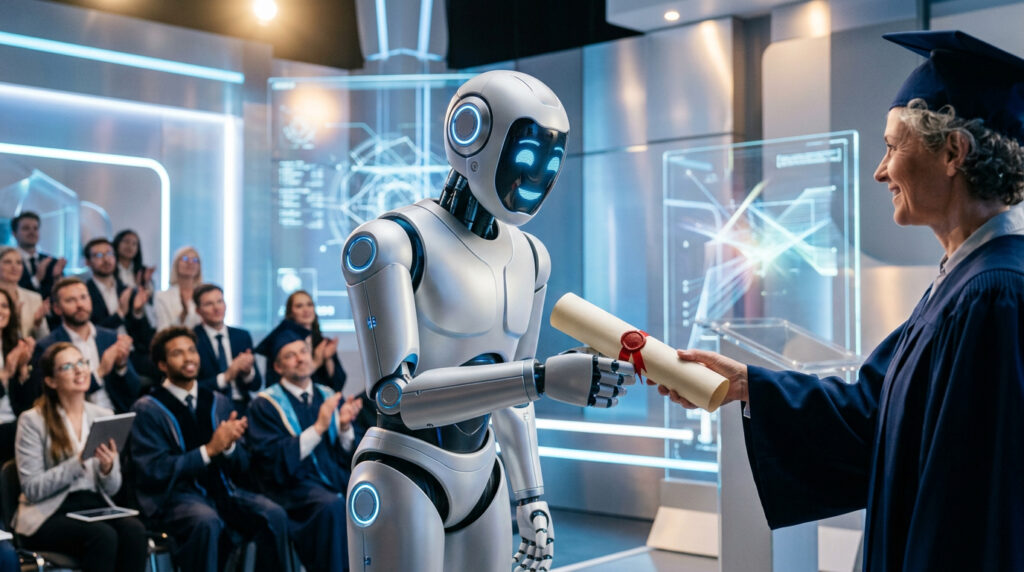
A while ago, I wrote that prompt engineering was the new core competency for leaders. I was right then, but the tech is moving so fast that I’m already updating my stance today. Just look at Anthropic: just recently they revealed that 80% of their new production code is now authored autonomously by Claude. The “Super Intern” just got promoted. It doesn’t need me (or you) to hand-hold it with complex command-line prompts anymore. It doesn’t need me to hand-hold it with complex command-line prompts anymore.
When generative AI first hit the mainstream, we were all scrambling to learn the new language. We traded “cheat codes” on how to talk to the machine. We built elaborate frameworks: “Act as a senior marketing executive with 20 years of experience. Format your response in a table. Use a persuasive but grounded tone.”
If you didn’t know the magic spell, you got mediocre results. The barrier to entry was learning how to engineer the prompt.
But if you have been using the latest iterations of tools like Claude or Gemini recently, you’ve likely noticed a profound shift. The friction is dissolving. These models have moved from rigid systems that require strict instructions to intuitive, conversational partners. They understand context, nuance, and most importantly, they understand intent.
The era of the “Prompt Engineer” as the ultimate job of the future is already coming to an end. It turns out, faster than we thought, that it’s been only a transitional phase.
But here is the danger: many organizations haven’t realized this yet. They are still building massive prompt libraries, treating them as permanent infrastructure. Software engineer Sean Goedecke recently hit the nail on the head when he wrote that “prompts are technical debt too”. If your team spends weeks crafting a fragile, 500-word “mega-prompt” to steer today’s model, you are building a house of cards. When the next major AI update drops, the underlying architecture shifts. Suddenly, your highly engineered prompt from last year doesn’t just stop working—it actively restricts and confuses the newer, smarter model. The guardrails get in the way.
Clinging to prompt engineering isn’t just outdated; it’s a liability. So, if the machine no longer needs us to carefully construct its instructions… where does our value actually lie?
1. The Shift from Creator to Chief Editor
For decades, the bottleneck in knowledge work was generation. Writing the code, drafting the strategy document, or outlining the project plan took days. AI solved the generation problem. Anthropic themselves admit that their engineering roles are fundamentally shifting from “writing software” to acting as “systems architects and judges”. The bottleneck is no longer generation. Now, the bottleneck is curation.
We are transitioning from a culture of writers and creators to a culture of editors and critics. Your value is no longer tied to how quickly you can produce a first draft (the Super Intern does that in seconds). Your value is in your ability to look at a highly polished, eloquently written output and ask: Is this actually any good? Is it true? Does it align with our strategic goals?
Critical thinking is no longer just a nice-to-have soft skill; it is the fundamental mechanism by which you extract value from AI output.
2. Domain Expertise is the Ultimate Filter
When I wrote about the “Alpha AI” culture, I noted that AI without direction is like a bulldozer without a skilled driver. But the new danger isn’t that the AI won’t know how to drive – it’s that it drives so smoothly you might not realize it’s heading in the wrong direction.
Modern AI doesn’t just output garbage when confused; it outputs highly plausible, confident-sounding garbage. This is why deep domain expertise is more critical than ever.
If you use AI to generate a marketing strategy but you don’t deeply understand the psychology of your target audience, you won’t be able to spot the subtle flaws in the AI’s logic. You cannot delegate your judgment to a machine. The deeper your expertise in your specific field, the better you can push back on the AI, challenge its assumptions, and mold its output from “average” to “exceptional.”
3. The Un-Automatable Human Core
As the interface between human and machine becomes invisible, the skills that separate us from the machine become our greatest assets.
The Super Intern can analyze a spreadsheet of employee performance data, but it cannot sit across from a struggling team member, read their body language, and offer the empathetic coaching they need to turn things around. It can draft a flawless negotiation email, but it cannot look a client in the eye and build the emotional trust required to close a multi-million dollar deal.
The leaders who will thrive in this next era are not the ones who spend hours tweaking prompts. They are the ones who let the AI handle the cognitive heavy lifting while they double down on human connection, psychological safety, and complex emotional intelligence.
The Takeaway
Prompt engineering was a necessary bridge to get us comfortable with our new digital colleagues, and we celebrate how they help us to leverage our output. Prompt Engineering is becoming a household skill – like working with spreadsheets years before.
Now, being able to craft perfect prompts isn’t the most valuable skill anymore. We don’t need better operators. We need better thinkers, deeper experts, and more empathetic leaders.
Interesting question: what does this super-availability of powerful AI mean to society? AI as the great equalizer? However: when everyone has a world-class copywriter, coder, and strategist in their pocket, the baseline for what is considered “acceptable” work skyrockets. I might come back to that in a later article… 😉